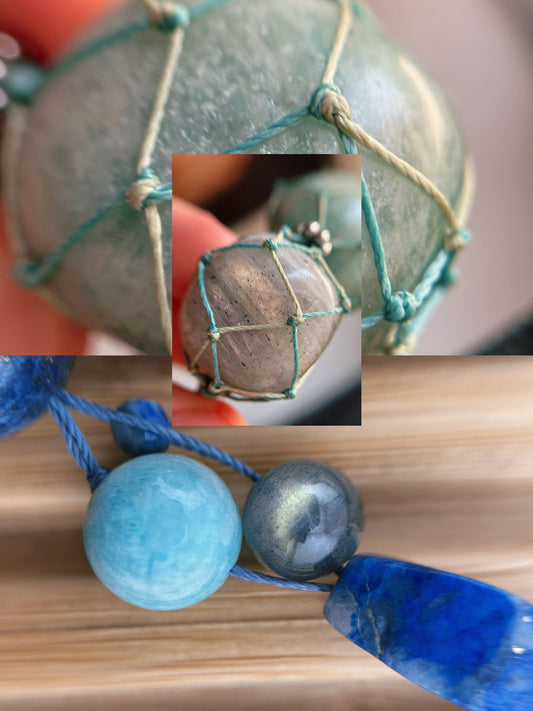
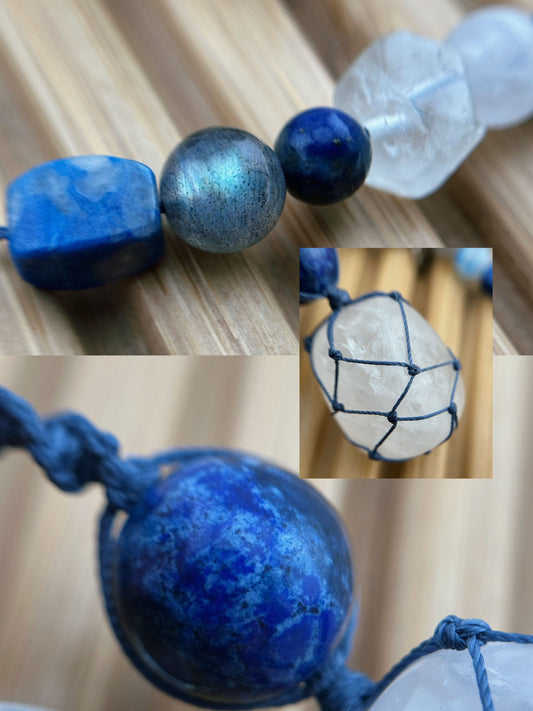
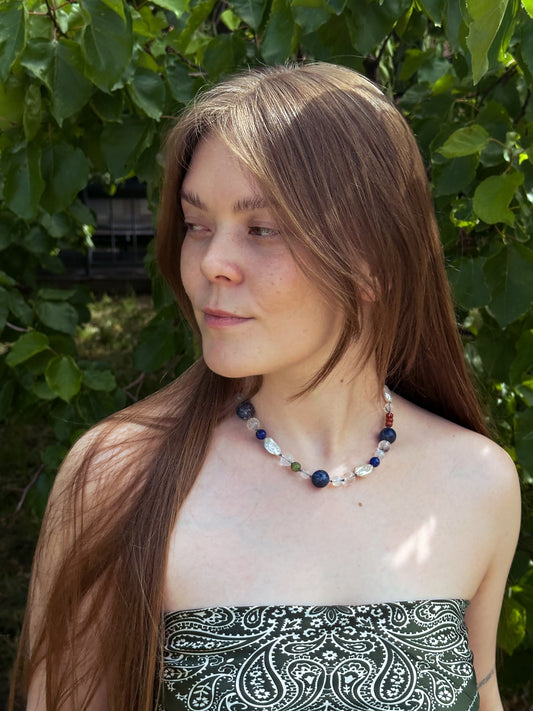
LAPIS LAZULI

Composition
A complex sodium-calcium aluminum silicate with sulfur. Often contains inclusions of pyrite and calcite.
Color
From rich ultramarine and dark blue to light blue. Golden inclusions of pyrite give the stone a "starry sky" effect.
Hardness
5–5.5 on the Mohs scale. Quite soft, requires careful handling.
Deposits
Afghanistan — the most valuable specimens, Russia (Baikal region), Chile, Pakistan, Tajikistan

Legends and Symbolism
Interesting Fact

Magical properties

Medical Properties
-
BOOST CREATIVITY Charm
Regular price $15,000.00 USDRegular price -
CREATIVITY + PROTECTION Charm
Regular price $15,000.00 USDRegular price -
THE WORLD necklace
Regular price $49,900.00 USDRegular price -
Fleur Bleue Pendants
Regular price From $9,000.00 USDRegular price -
Lapis Lazuli and Pearl Pendant
Regular price From $3,800.00 USDRegular price -
Mountain Berry
Regular price $19,900.00 USDRegular price -

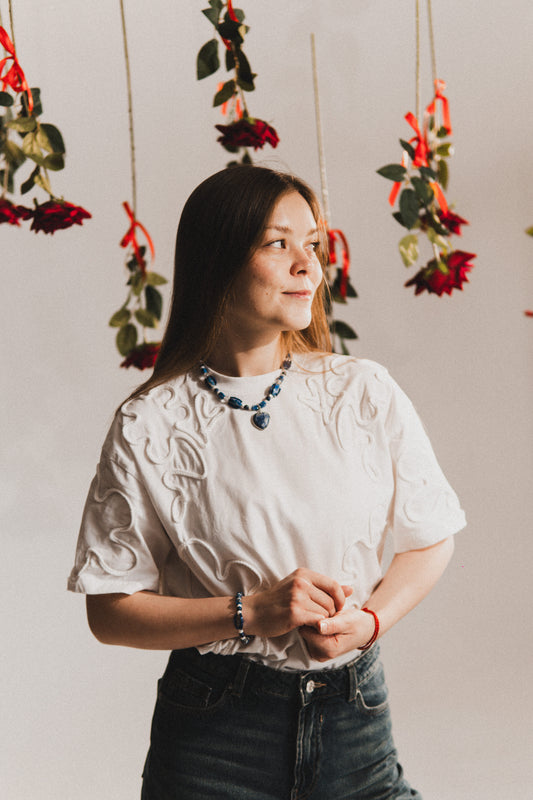 Sale
SaleOn the Titanic
Regular price $13,900.00 USDRegular price$19,900.00 USDSale price $13,900.00 USDSale -

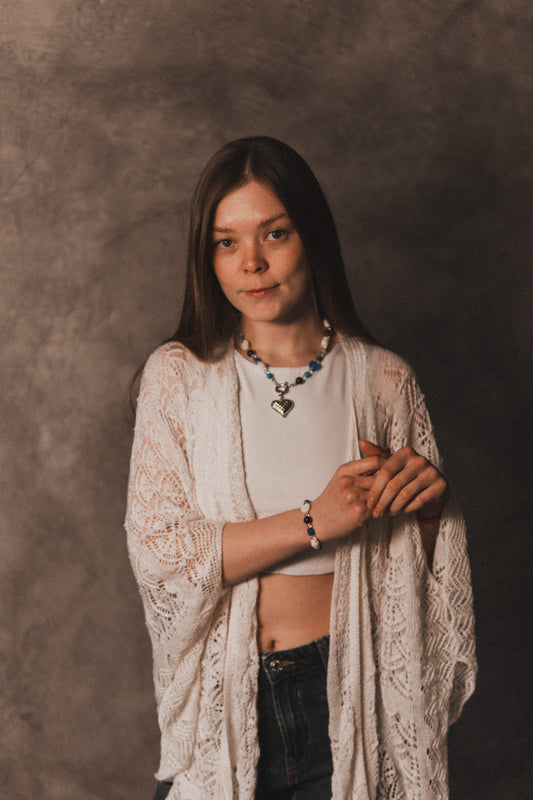 Sale
SaleSarat's Arev
Regular price $13,900.00 USDRegular price$19,900.00 USDSale price $13,900.00 USDSale -
Lapis Lazuli Chocker
Regular price $12,200.00 USDRegular price